

Working with aerial lifts puts you high above the ground—often on unstable or uneven surfaces. Whether you’re using a scissor lift or a boom lift, every action matters. One misstep can lead to a fall, a tip-over, or serious injury.
In British Columbia, safety regulations are strict for a reason. Aerial lifts are powerful machines. Without proper training and procedures, they can become a serious hazard.
Here’s what you and your crew need to know to stay safe and meet WorkSafeBC standards.
Know What You’re Operating
Every aerial lift is different. Treat them that way.
Before using any lift, confirm:
The model and type (scissor, articulating boom, telescoping boom, vertical mast)
The platform height and weight capacity
Specific controls, including emergency lowering systems
Required personal protective equipment (PPE)
Do you know how your machine behaves at full extension? Are you trained on that exact model? If not, don’t operate it.
Always Perform a Pre-Use Inspection
Check the lift before every shift. This isn’t optional—it’s required under WorkSafeBC regulation.
Look for:
Leaks (hydraulic, fuel, oil)
Damaged tires or wheels
Loose bolts, broken welds, or bent guardrails
Missing safety pins or control labels
Faulty lights, alarms, or limit switches
Dead batteries or low fuel
Document the inspection and tag out the lift if any defects are found. If it feels unsafe, it probably is.
Evaluate the Work Area
Don’t raise the platform without scanning your surroundings.
Check for:
Power lines or overhead obstructions (at least 3 metres / 10 feet clearance)
Ground conditions (soft soil, ice, debris, potholes)
Slopes, curbs, or uneven surfaces
Weather conditions—wind, rain, snow, or fog
Boom lifts especially are vulnerable to wind. Many have a maximum wind tolerance of just 28 mph (45 km/h). If you’re unsure, don’t elevate.
Use Fall Protection Correctly
Fall protection isn’t just about wearing a harness. It’s about wearing it properly and connecting it to the correct anchor point.
Follow these steps:
Wear a CSA-approved full-body harness
Inspect it before each use for cuts, fraying, or damage
Connect to the designated anchor inside the platform (not the guardrail)
Adjust straps snugly—if it’s too loose, it’s useless
A 2022 WorkSafeBC report found that 25% of aerial lift accidents involved improperly used or missing fall protection. Don’t add to that statistic.
Stabilize Before You Elevate
If the machine isn’t stable, you’re not safe.
Before going up:
Make sure the surface is flat, level, and strong enough to support the load
Deploy outriggers if your lift has them, and place cribbing if needed
Don’t raise the lift on a slope unless the manufacturer allows it
Never override safety alarms like tilt sensors or weight alerts
If an alarm goes off, it’s telling you something is wrong. Respect the machine’s limits.
Know the Platform’s Capacity
Every aerial lift has a maximum rated load. This includes:
The weight of the operator(s)
Tools
Building materials or other equipment
Find the platform capacity on the manufacturer’s plate. Most scissor lifts are rated for 500–1,200 lbs, while boom lifts can vary widely. Going over that number can affect the lift’s balance and increase the risk of tipping.
Don’t Travel While Elevated—Unless Trained and Permitted
Some scissor lifts and boom lifts are designed to move while raised. Many are not.
Only travel while elevated if:
The manufacturer’s manual says it’s allowed
The ground is flat and free of obstacles
You’re trained and comfortable doing it
If the lift isn’t built for it, moving it while raised can cause sudden instability and tip-overs. Even minor slopes can be dangerous.
Avoid Distractions and Unsafe Behavior
Aerial lifts demand full attention.
Avoid:
Using a phone or other device while elevated
Reaching too far beyond the guardrails
Standing on rails, ladders, or objects to gain extra height
Making modifications to the lift or platform without manufacturer approval
Keep both feet on the platform floor at all times. If you can’t reach something, reposition the lift.
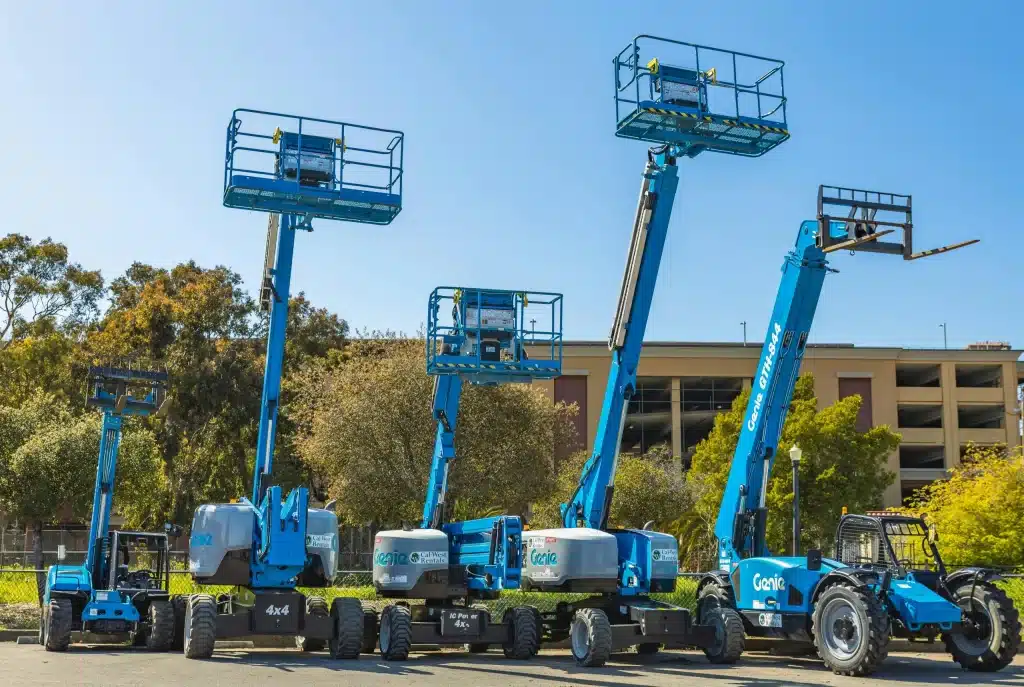
Under WorkSafeBC regulations, anyone operating an aerial lift must be trained and competent in:
Safe machine operation
Pre-use inspections
Hazard awareness
Emergency response
Proper use of fall protection
Watching a video or shadowing someone for a few minutes isn’t enough. You need documented certification that proves you’ve met the required standards.
Rob’s Forklift Training provides onsite Aerial Lift (MEWP) training across BC. We train your staff on your equipment, at your jobsite, using real-world scenarios. It’s the best way to ensure your operators are confident and compliant.
Have you inspected the machine?
Do you understand the controls?
Are you wearing and using fall protection correctly?
Are you confident in your ability to operate safely?
If you hesitate on any of those, stop and reassess.
Aerial lift safety isn’t just a checkbox. It’s a mindset. And in British Columbia, it’s the law.
Need onsite MEWP training for your team?
Book a certified aerial lift course with Rob’s Forklift Training and make safety part of your job—not an afterthought.